Pinboard archive / Engineering case study
Context
Part of a university team platform spanning staff operations, a donor application, an API, and one SQL Server domain.
- Working context
- I built this university project with one teammate.
- My role
- I implemented most of the system as part of the team; responsibility was shared.
- Who was affected
- Donation-center employees and administrators.
Problem brief
Problem
Blood-bank staff need one traceable workflow for donors, units, tests, inventory, patients, transfusions, and employee access.
Operating constraints
- 01Blood compatibility, test results, expiration, and unit allocation are domain rules, not presentation details.
- 02Medical and employee records require validation and role-controlled access.
Evidence / reasoning
Problem Research
Unit lifecycle
I mapped every blood-unit transition from donation through testing, inventory, transfusion, or disposal so no screen could bypass its lifecycle.
Operational roles
I separated donor, patient, inventory, and reporting capabilities to identify the access each staff role actually needed.
Safe allocation rules
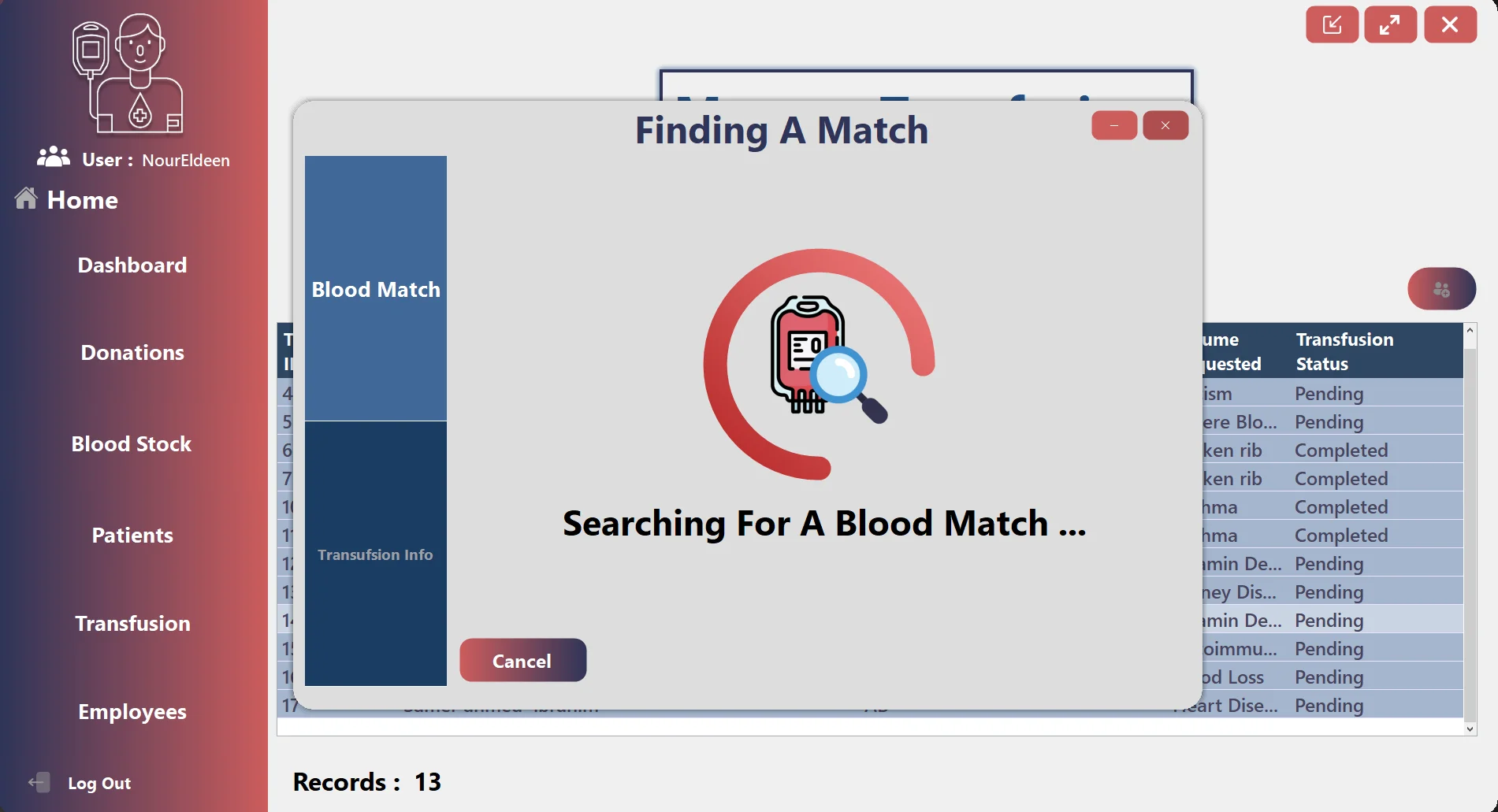
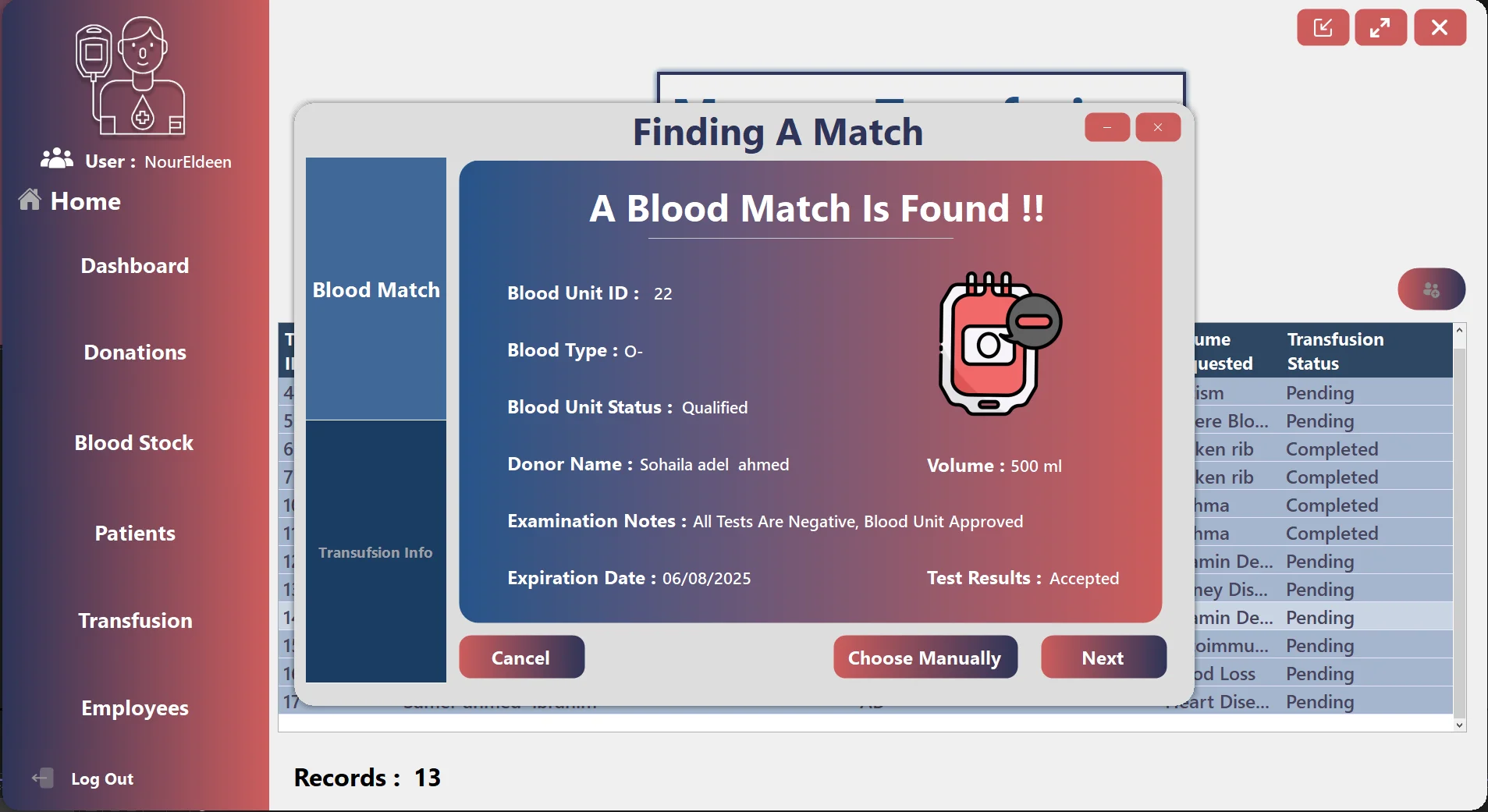
I traced matching from patient request to compatibility, test result, expiry, availability, and final unit allocation.
Implementation files
How I Solved It
Donation and inventory
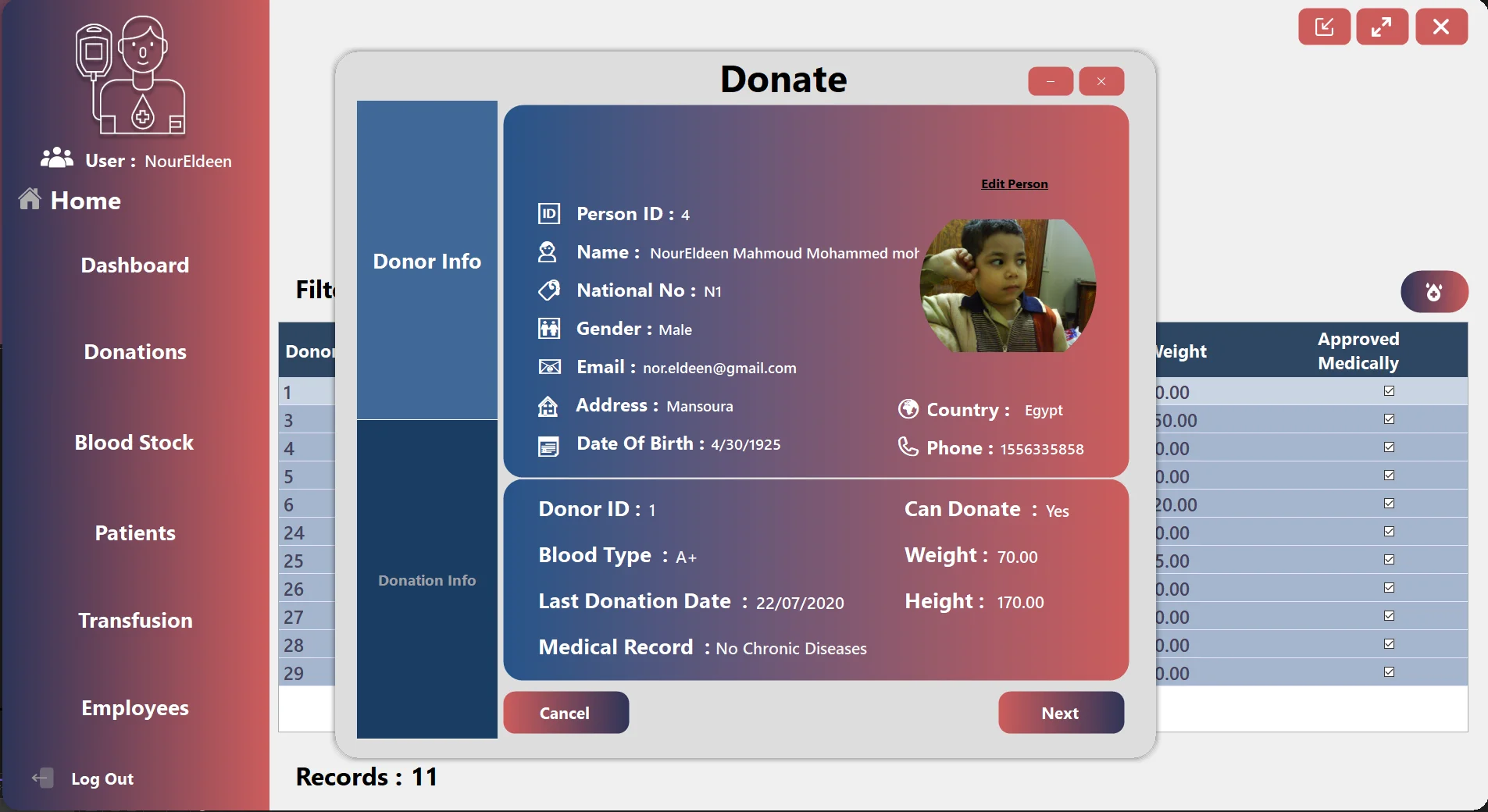
I connected donor registration, donation processing, unit testing, stock monitoring, and expiry in one workflow.
Transfusion workflow
I connected patient requests to matching and blood-unit allocation.
System map
System Architecture
Diagnostic notes
Challenges
Blood-unit lifecycle integrity
Testing, expiry, allocation, transfusion, and disposal can all change whether a unit is usable.
Compatible does not mean available
A compatible unit can still be expired, untested, allocated, or unavailable.
Role-sensitive records
Donor medical data, patient requests, employee records, and reports should not share unrestricted access.
Quality gates
Technical Safeguards
Security
I applied authentication, role-based access, input sanitization, and audit logging to critical operations.
Reliability
I connected inventory state to operational history through automatic expiry detection and unit traceability.
Ownership record
My Contribution
I implemented most of this university team system while sharing responsibility with my teammate.
- Working context
- I built this university project with one teammate.
- My role
- I implemented most of the system as part of the team; responsibility was shared.
Closing record
Outcome
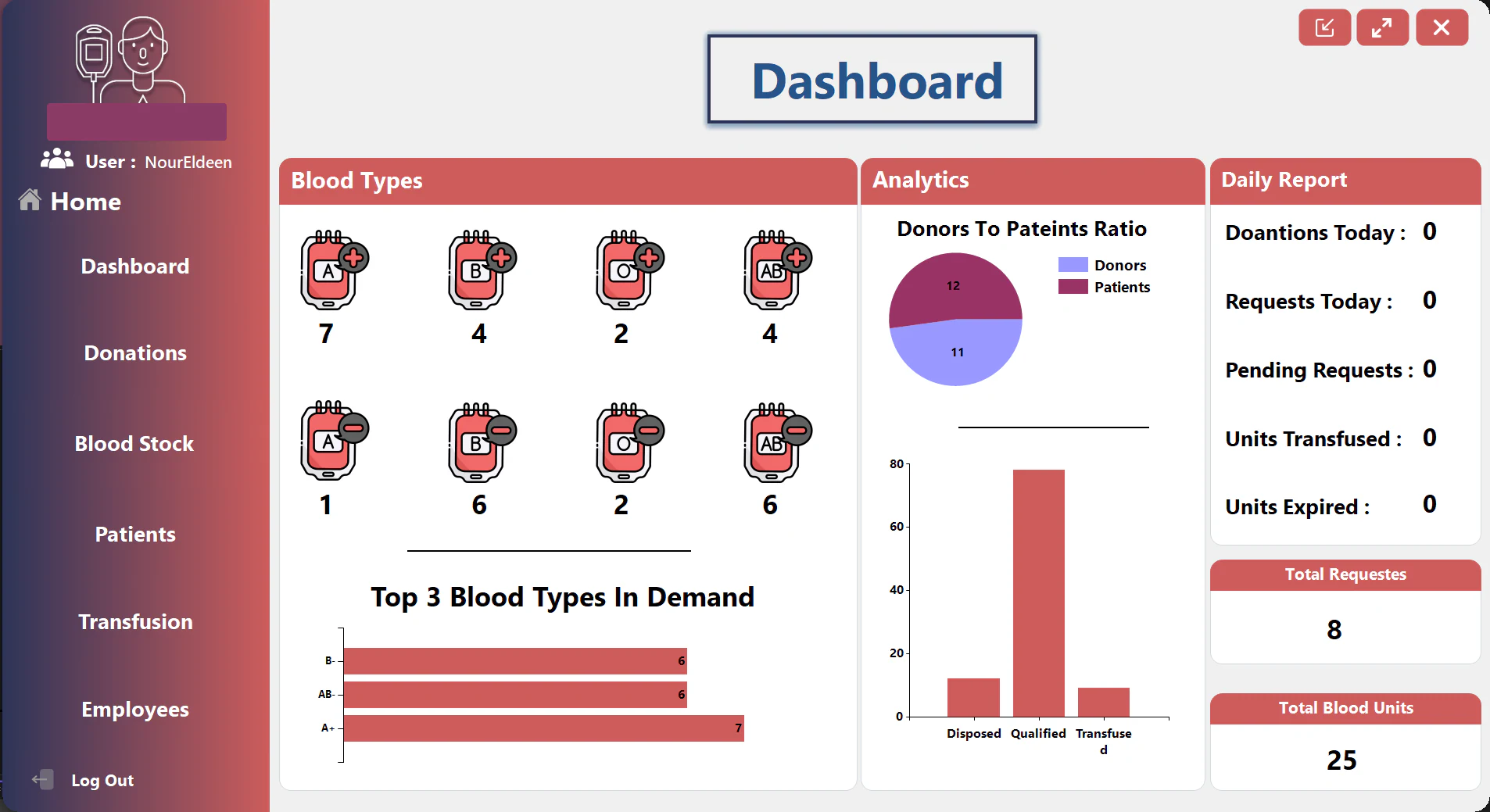
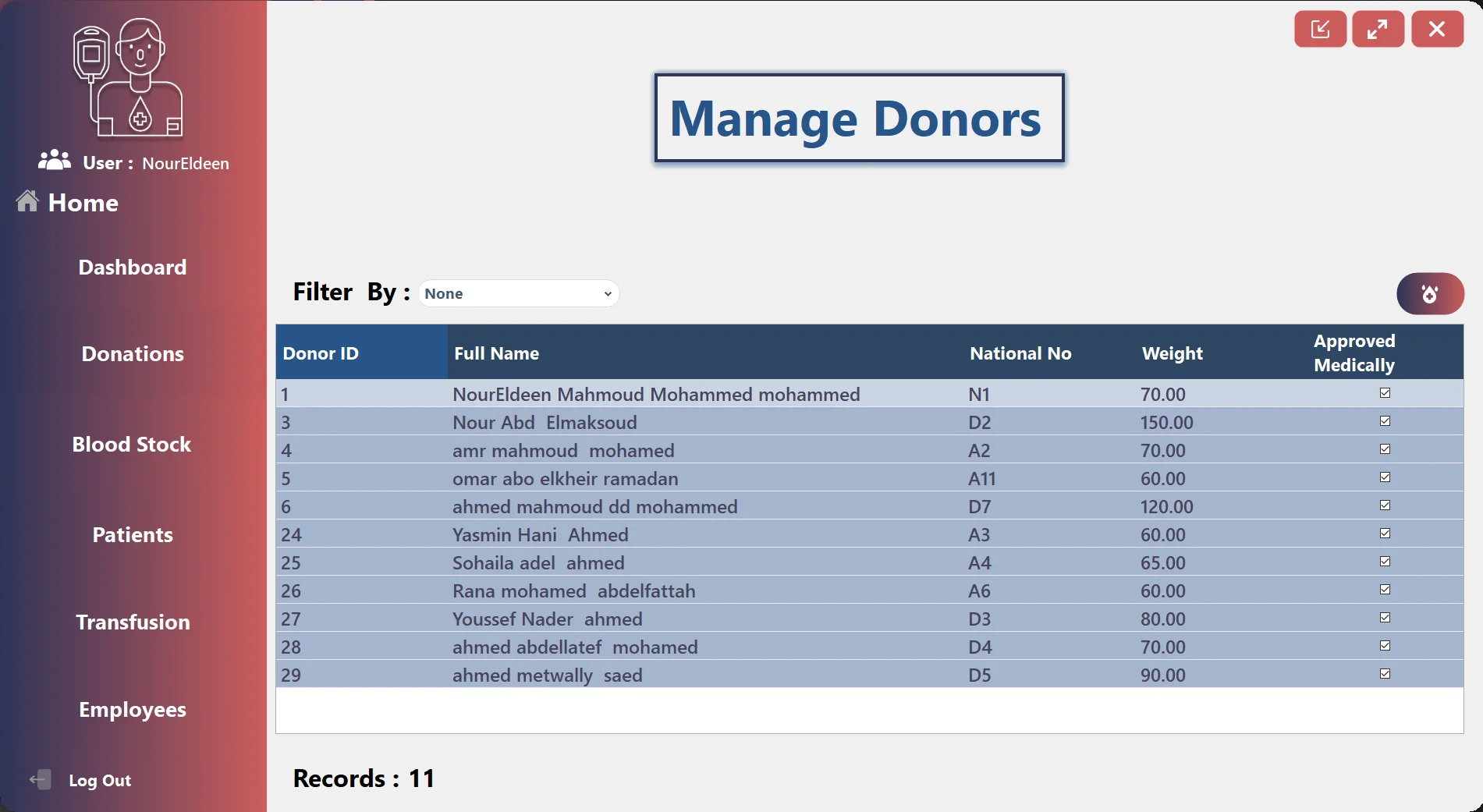
Our team delivered a three-tier desktop system covering donor, patient, employee, unit, donation, transfusion, matching, and reporting workflows.
I publish the source, setup instructions, operational screenshots, and three-tier structure.
I present this as shared team work; automated lifecycle coverage for compatibility, expiry, allocation, and transfusion is the next technical step.
My next technical step is to add automated lifecycle tests for compatibility, expiry, allocation, transfusion, and disposal transitions.
Curated project media
Related Evidence