Pinboard archive / Engineering case study
Context
A supporting .NET desktop project focused on a rules-heavy government licensing domain.
- Working context
- I developed this as a supporting .NET desktop project.
- My role
- I implemented the Windows Forms workflows, business rules, ADO.NET data access, and SQL Server integration.
- Who was affected
- Government licensing staff managing applicants, drivers, tests, and licenses.
Problem brief
Problem
A licensing department must coordinate people, applications, staged tests, fees, license states, users, and enforcement history without losing domain rules.
Operating constraints
- 01Eligibility, age, test sequence, fees, validity, and detainment rules vary by operation and license class.
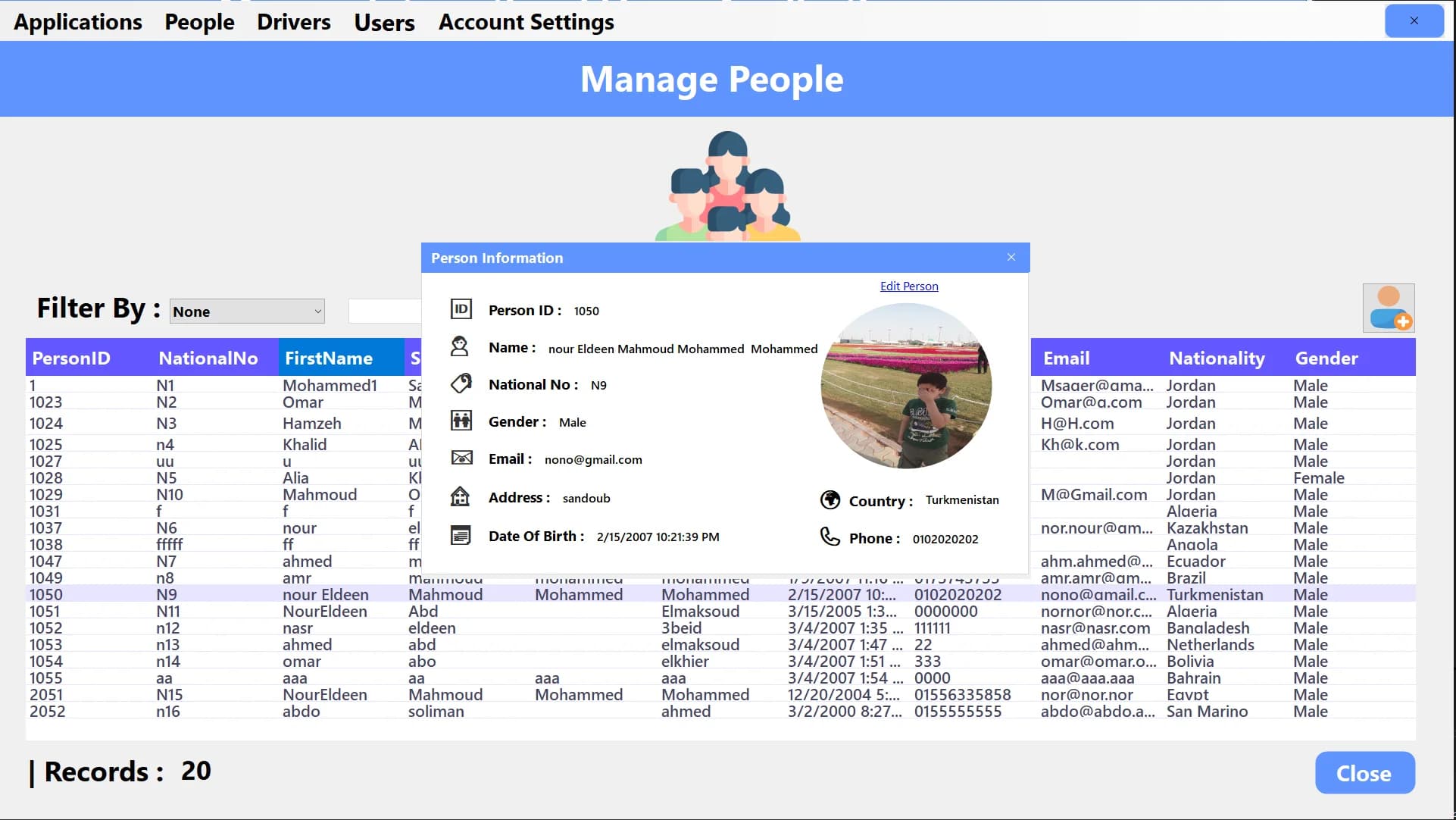
- 02Personal and credential data requires controlled user access.
Evidence / reasoning
Problem Research
Lifecycle before screens
I compared new licenses, renewals, replacements, international permits, and detainment to identify their shared records and different prerequisites before building forms.
Staged test progression
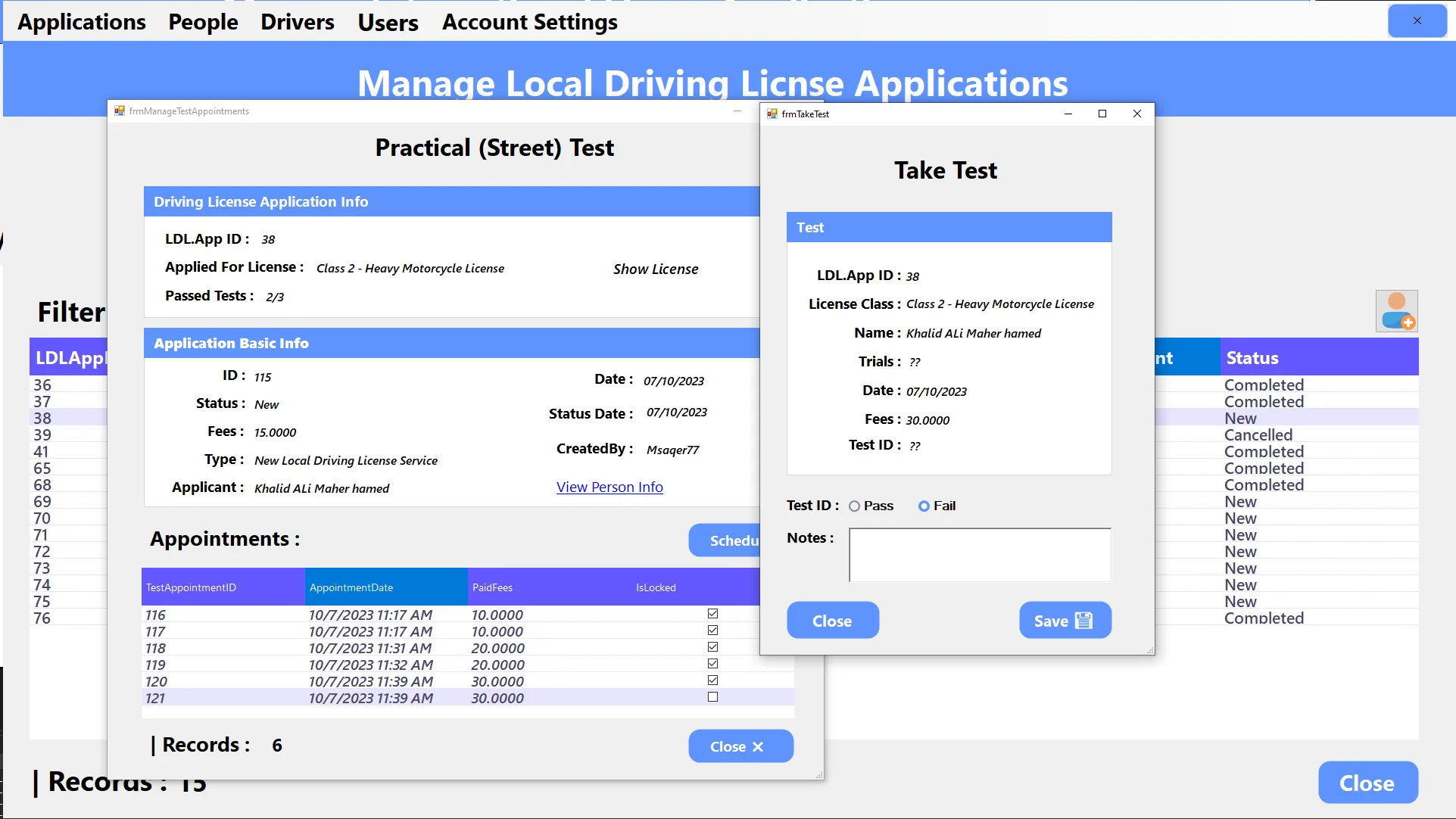
I traced vision, theory, and practical tests through appointments, results, retakes, fees, and ordered eligibility.
History as a rule input
I examined how prior applications, active licenses, detainment, and driver history affect whether a new service can proceed.
Implementation files
How I Solved It
License application pipeline
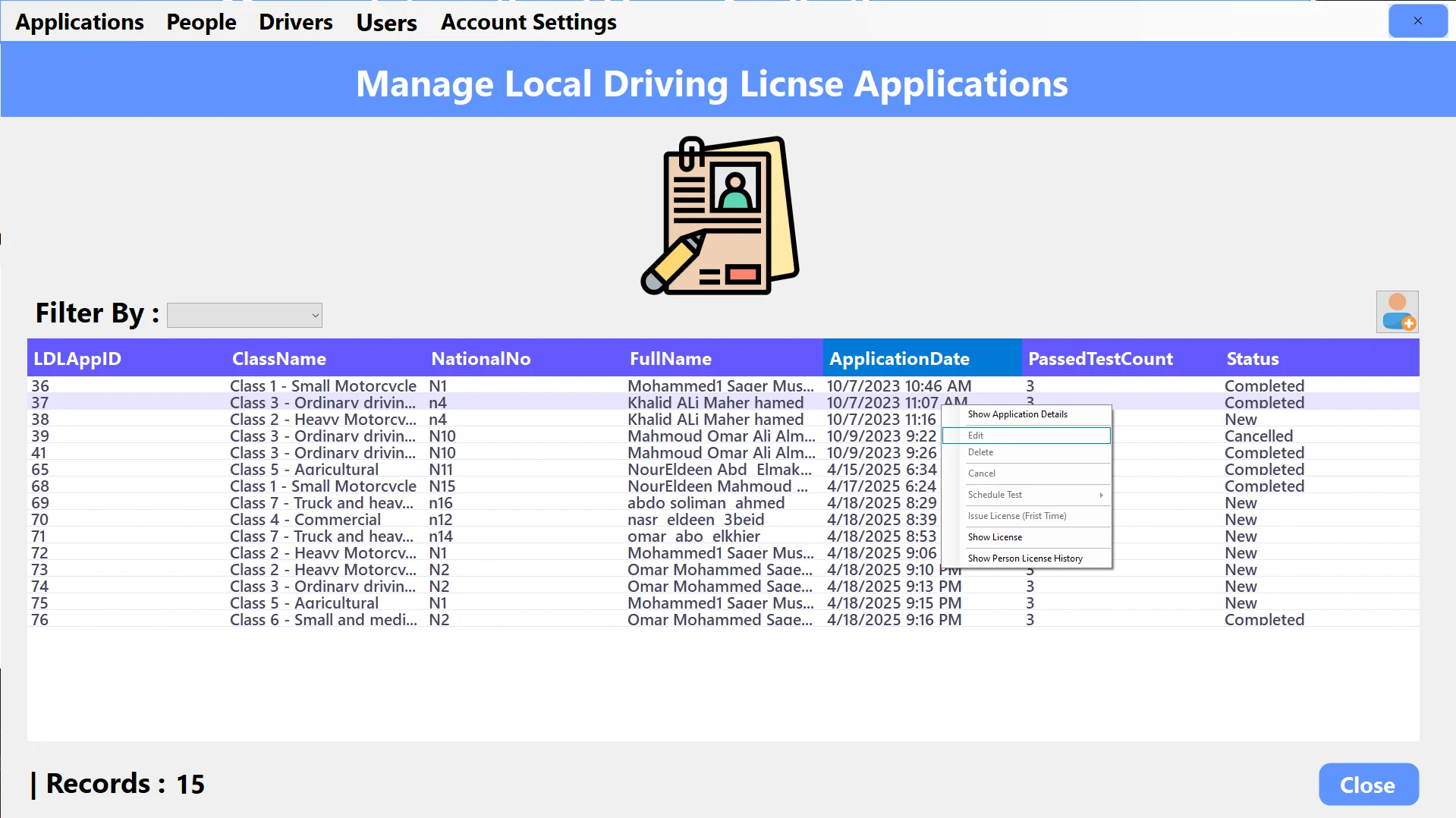
I built an application pipeline that moves through eligibility, fees, vision, theory, practical testing, and issuance.
License services
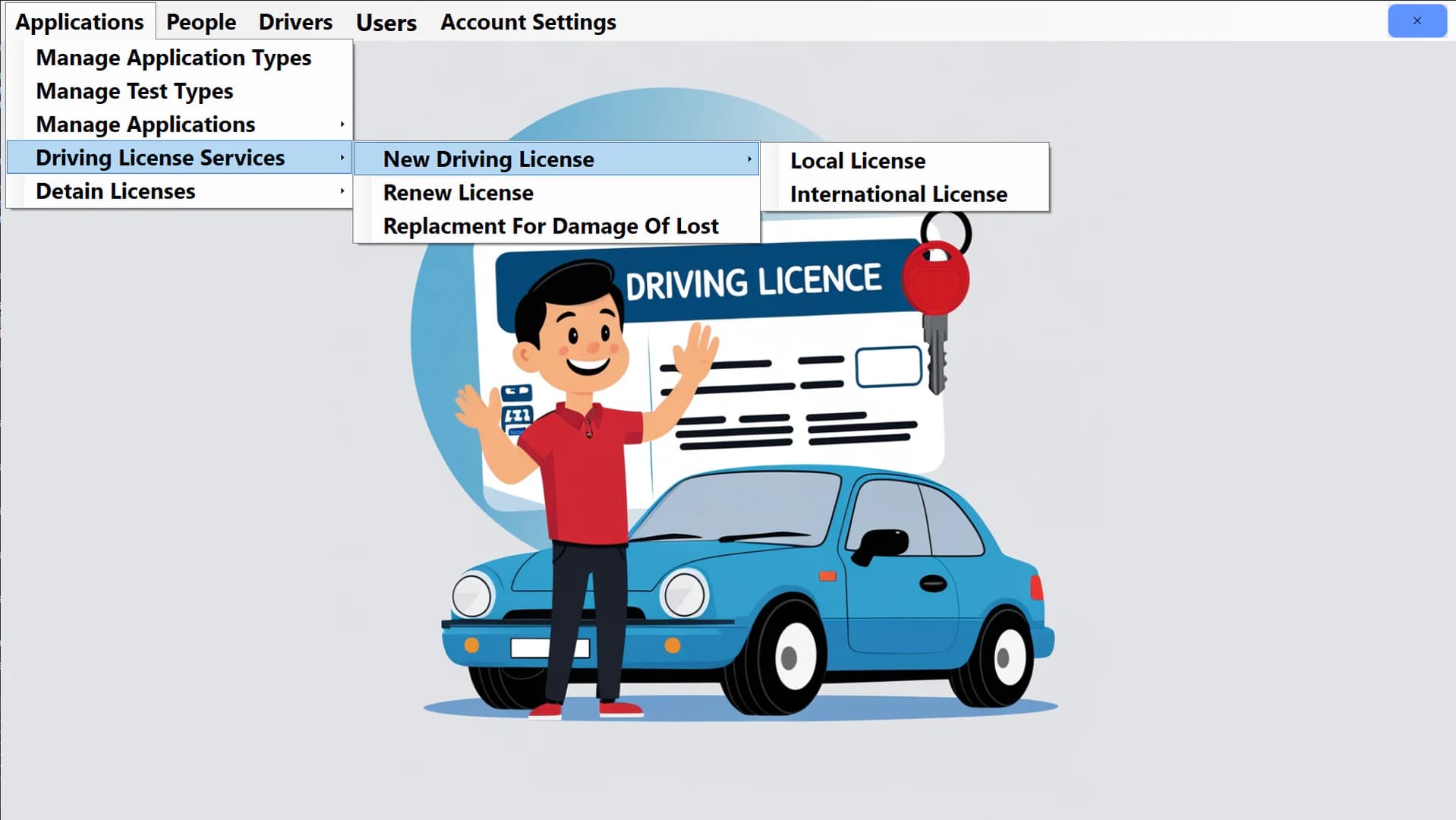
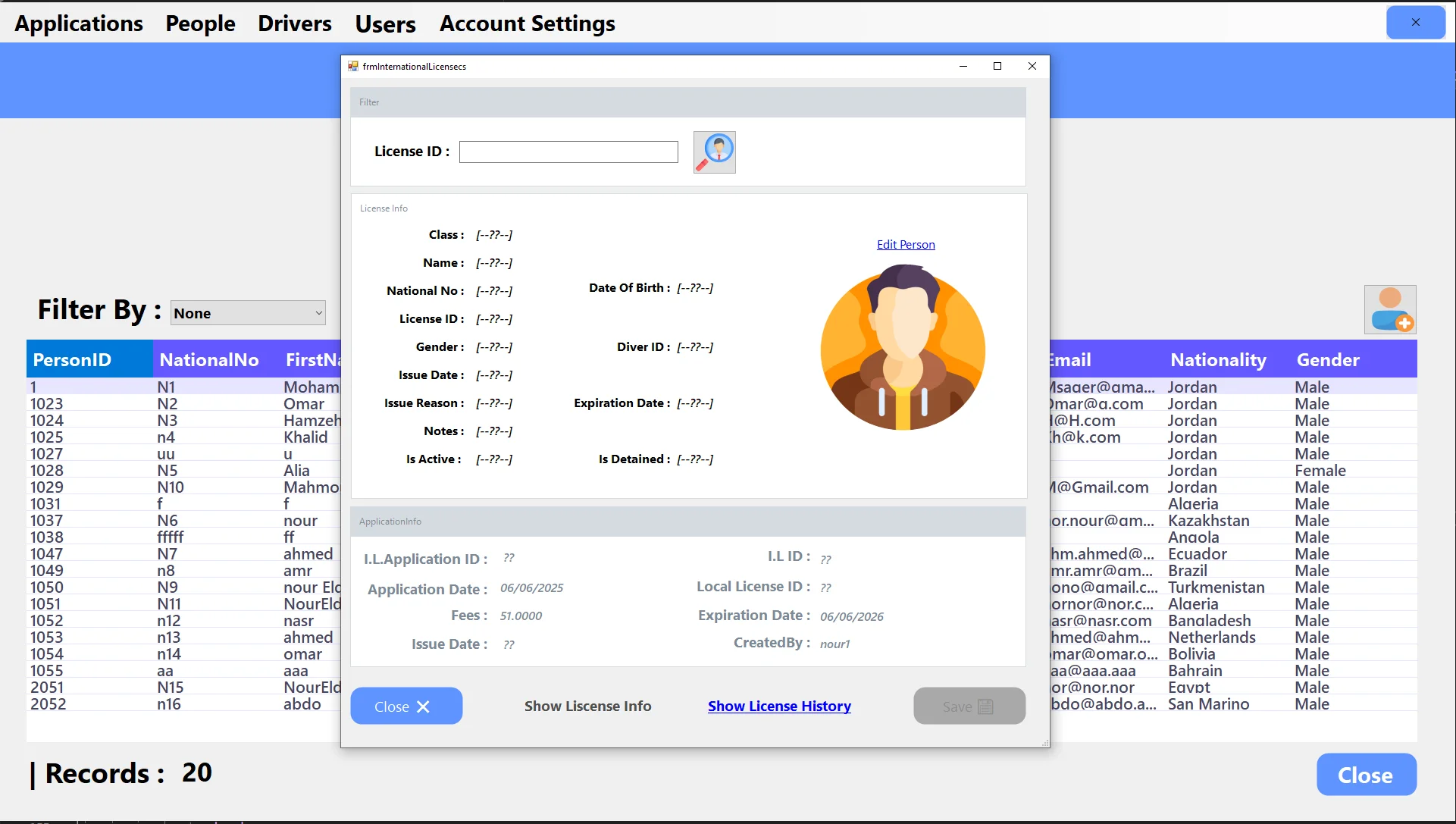
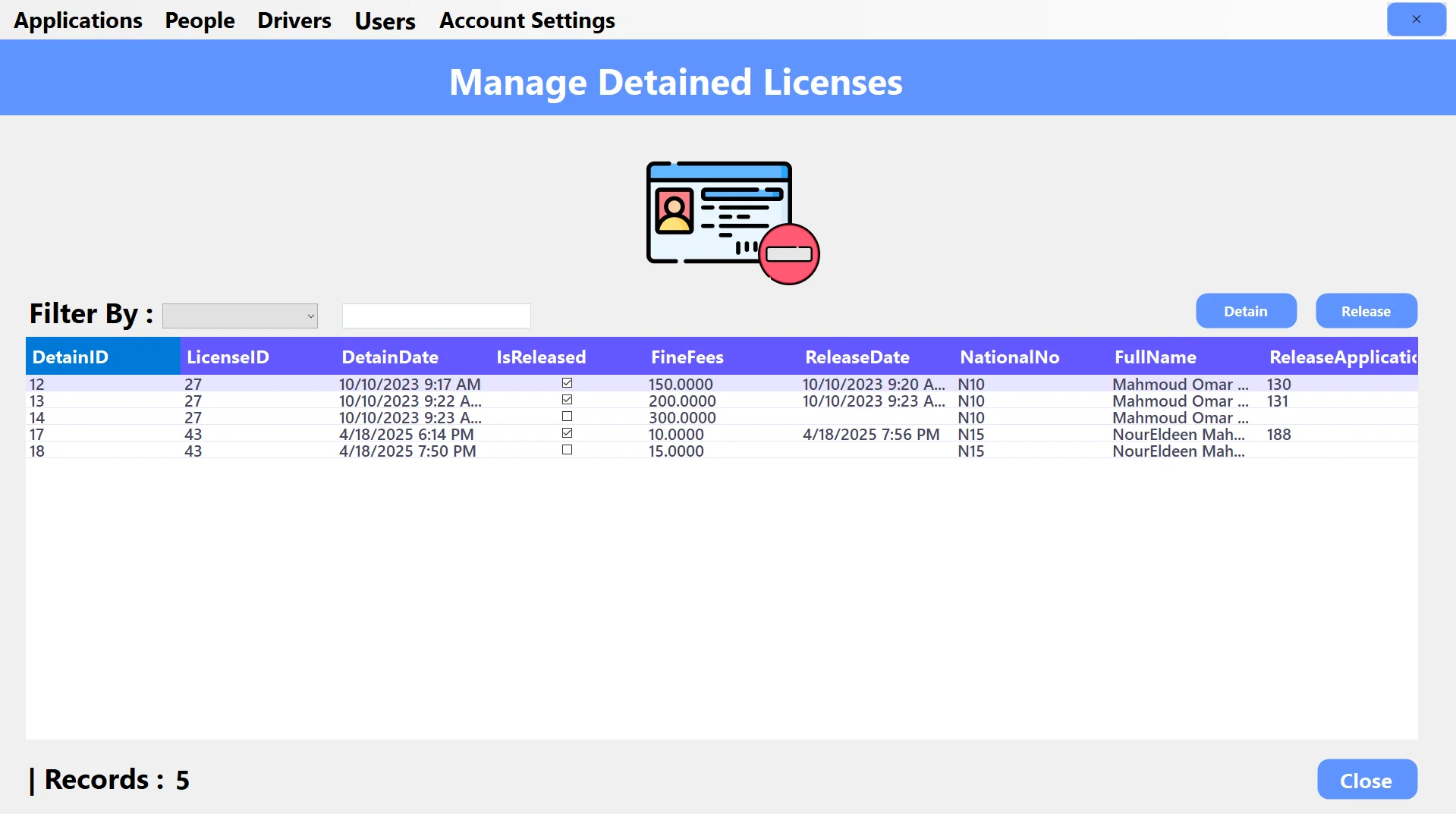
I implemented renewals, international permits, lost or damaged replacements, detainment, and release.
System map
System Architecture
Diagnostic notes
Challenges
Ordered test eligibility
Applicants cannot skip from vision to practical testing, and failed attempts require a new appointment and fee path.
One driver, multiple services
Renewal, replacement, international licensing, detainment, and release all modify related license history differently.
Eligibility depends on history
Age, license class, active licenses, prior applications, validity, and detainment can block an operation.
Quality gates
Technical Safeguards
Rule isolation
I separated Windows Forms event handling, business rules, and ADO.NET data access so lifecycle checks stay reusable across services.
Controlled persistence
I used parameterized ADO.NET queries and commands against SQL Server, then exposed printable operational records through Crystal Reports.
Ownership record
My Contribution
I implemented the Windows Forms workflows, business rules, ADO.NET data access, and SQL Server integration.
- Working context
- I developed this as a supporting .NET desktop project.
- My role
- I implemented the Windows Forms workflows, business rules, ADO.NET data access, and SQL Server integration.
Closing record
Outcome
I implemented people, users, license classes, applications, staged tests, issuance, renewals, international permits, replacements, and detainment workflows in one desktop system.
I publish the solution, database backup instructions, workflow details, and interface screenshots.
I use this supporting project to demonstrate rules-heavy desktop design; automated lifecycle tests are the next technical step.
My next technical step is to add automated tests around ordered eligibility, duplicate applications, renewal validity, and detainment transitions.
Curated project media
Related Evidence